Concrete Cutting & Coring Costs in Vancouver: What Affects the Price
October 2, 2026
Fire Stopping Cost in Vancouver: What Affects the Price
October 3, 2026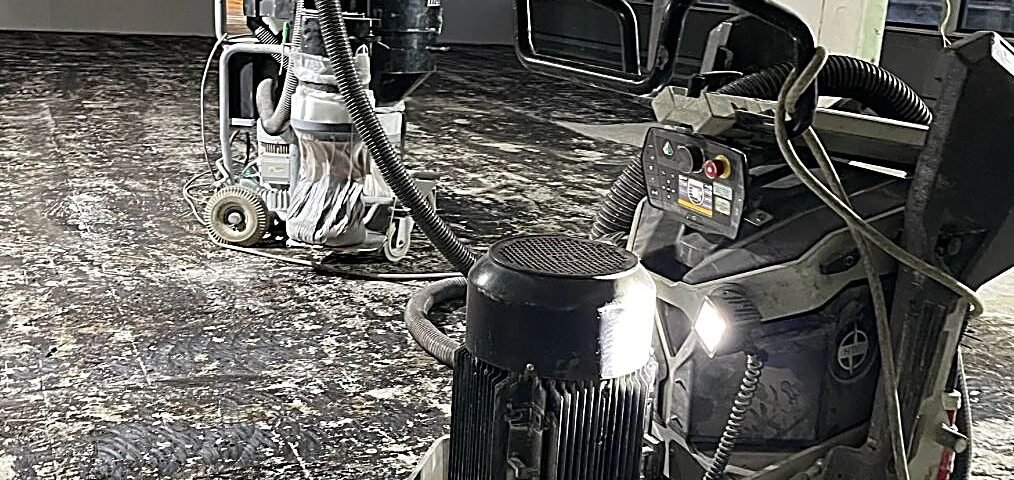
If you’re planning an epoxy coating, polishing a concrete floor, or fixing uneven slabs in Greater Vancouver, one of the first questions you’ll ask is: how much does concrete grinding cost? The honest answer is that it depends on a handful of factors — the size of the area, the condition of the concrete, and whether it’s a floor or a wall. This guide breaks down what drives the price so you know what to expect before you call for a quote.
What concrete grinding actually involves
Concrete grinding uses diamond tooling to shave down the surface of concrete — floors, walls, or both. It’s the standard prep step before epoxy coatings, floor polishing, or overlays, and it’s also how contractors remove high spots, old adhesives, paint, and trip hazards. Professional grinders use dust-controlled equipment with HEPA filtration, so the work stays clean enough for occupied homes and commercial spaces.
What affects concrete grinding cost in Vancouver
- Size of the area. Grinding is usually priced per square foot, and the rate drops as the area gets bigger. A small 100 sq ft patch costs more per foot than a 2,000 sq ft warehouse floor because setup, travel, and equipment mobilization are spread over less area.
- Floor vs. wall grinding. Floor grinding is faster — the machine does the work walking forward. Wall grinding is slower, more labor-intensive, and often needs scaffolding or lifts, so it typically costs more per square foot.
- Condition of the concrete. Soft, even concrete grinds quickly. Hard-troweled, rain-damaged, or heavily contaminated concrete (old glue, thick paint, oil stains) takes more passes and more diamond tooling — and tooling wear is a real cost driver.
- What needs to come off. Light surface prep for a coating is the cheapest job. Removing thick epoxy, mastic, or high spots of half an inch or more takes significantly longer.
- Cracks and repairs. If the slab needs crack chasing, patching, or joint repair before grinding, that’s additional work — but doing it in the same visit with the same contractor saves you a second mobilization.
- Access and timing. Tight parkades, occupied retail spaces, or after-hours/night work add to the cost. Straightforward daytime access to an open floor is the most economical.
- Dust control requirements. Occupied buildings, food facilities, and hospitals need full dust containment — professional HEPA-filtered equipment handles this, and it’s worth confirming your contractor has it.
Typical price ranges in Greater Vancouver
For budgeting purposes, most residential and light-commercial concrete grinding in the Vancouver area falls into broad bands: small areas and wall work at the higher end per square foot, large open floors at the lower end. Because every slab is different, reputable contractors quote per project after seeing photos or visiting the site — be wary of anyone giving a firm price per square foot without asking about the concrete’s condition.
How to get an accurate quote
The fastest way to an accurate number: send a few photos of the area (including close-ups of the surface condition), the approximate square footage, and tell the contractor what comes next (epoxy? polish? overlay?). A good contractor will ask about coatings, cracks, and access before quoting — those questions are a sign you’re dealing with a pro.
At scanXpert, we provide free estimates across Greater Vancouver and all of BC. Our crew handles both floor and wall grinding with dust-controlled HEPA equipment, and because we also do cutting, coring, and demolition, one call covers the whole job. Call (236) 868-2111 for a free quote.
Frequently asked questions
How much does concrete grinding cost in Vancouver?
It depends on area size, floor vs. wall, concrete condition, and what needs removing. Small or wall jobs cost more per square foot; large open floors cost less. Send photos and square footage for a free, accurate quote: (236) 868-2111.
Is concrete grinding dusty?
Not with professional equipment. scanXpert uses dust-controlled grinders with HEPA filtration, so grinding stays clean enough for occupied homes and commercial spaces.
What’s the difference between grinding and polishing concrete?
Grinding is the prep step — it levels the surface and removes coatings or imperfections. Polishing is the multi-step refining process that comes after, creating the glossy finished floor. Most polished floors start with grinding.
Can you grind concrete walls as well as floors?
Yes. Wall grinding is common for removing form lines, high spots, and old coatings in parkades, basements, and commercial buildings. It’s slower than floor work and usually priced accordingly.
Do I need grinding before epoxy?
In almost all cases, yes. Epoxy needs a mechanically profiled surface to bond properly — grinding is the standard prep method recommended by coating manufacturers.